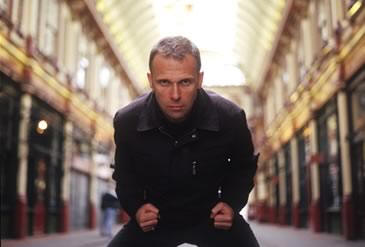
Cathal Coughlan
Cyprus Avenue
Thu 22 Mar 2007
Doors: 9:00 pm
€17
Unreliability. Never welcome in this world, but often tolerated in the face of lucrative creativity, poor weather or ill-health. It is most unwelcome in these times, when security is humanity's heart's desire, yet true security (of energy supply, of export earnings) is nowhere to be found.
Cathal Coughlan has never failed to turn up to an appointment of any kind in his life, yet he is inherently unreliable. Here is why.
Back in the days before 'post-punk' became yet another marketing niche label, and simply meant the music which people with short hair made after punk subsided, people made music with whatever tools and people were available, with their sights set mostly on local glory and/or vengeance, not on unattainables such as 'career' or 'professionalism'.
Coughlan offered the first fruits of his unreliability to the world as that era was ending, through the medium of his partnership with Sean O'Hagan in Microdisney. Formed in Ireland - which at that time, disgracefully, lacked a material or social infrastructure which could support a popular culture - they created most of their recorded work while living dissolutely in London, recording five albums prior to their split in 1987.
This music was very unreliable, being melodic in nature, yet played without the delicacy or the precise degree of sheen which was fashionable during that era. The words of the songs tended to be either vituperative, aimlessly surreal or sarcastic, the tunes thoughtful and pleasant. The songs' arrangements varied in style from accidentally stark to lushly diffident. There was no brand, nor could one be affixed by even by the world-class brains employed at the major record company through which they released their final two albums.
Having very publicly demonstrated the music's unreliability by means of a final onstage self-abasement turn, which was transmitted to a unsuspecting world via BBC2 TV, Coughlan did the next unreliable thing and formed another group, called The Fatima Mansions.
On this occasion, unexpurgated lyrical content which reflected his real-life preoccupations (the tension, regret and detritus which characterise lives lived without an anchor) was harnessed to a raucous musical backing in which anything, from rock guitar noise to misused digital technology and German theatre song, could be used and abused to convey the participants' sense of the ridiculous, and their deep and non-righteous anxiety.
Touring heavily in Europe and America through the early and mid-1990's, The Fatima Mansions released four albums, and Coughlan's side-project, the more anarchic Bubonique, released two, prior to the intervention of the US record business, which, unable to regain the money invested in the by-now-certifiably unreliable Fatima Mansions brand through sales, consoled itself with cheap laughs by holding Coughlan under contract, without the intention to record his music, until the end of the decade.
By the end of that period, the group had dispersed, Coughlan had abandoned his fascination with signal distortion and had begun recording and releasing records under his own name. First came 1997's alienated and intricately-soundscaped Grand Necropolitan, and then 2000's more warmly-arranged Black River Falls. On both records, songs reflecting more sober and humane concerns were given a suitably tuneful accompaniment, by a now-evolving core of musicians drawn from the worlds of jazz and contemporary music.
Following the release of 2002's The Sky's Awful Blue, whose at times claustrophobic sound echoed the unease palpable in East London and suburban Paris, as western Europe awaited its share of Islamist wrath and of that wrath's Atlanticist companion, Coughlan decided that it was time to approach the construction of a group of songs in a different way, with a view to exposing it in a manner responsive to the public's changing ways of accessing music, though not defined by them.
Following on from his beneficial experiences in providing music for films in the late 1990's, and from his work as a vocalist in various musical theatre productions in France from 2001 onwards, he decided to seek a commission to create a cycle of songs around an unreliable narrative core - though not an opera, and not a 'concept album' (since the first phase of the work was intended solely to be performed live, with improvised elements).
Flannery's Mounted Head, a song-cycle with visual elements contributed by video artist Rob Flint (of Scopac and Ticklish) and mixed-media artist Linda Quinlan, premiered in Cork in September 2005, as part of the city's year as European Capital of Culture.
The album Foburg, due for release in September 2006, is a development of sections of Flannery's Mounted Head, consisting of 14 songs, which vary from the relatively conventional to the apparently unstructured. Recorded in 3 days, but edited and destabilised over a period of months, it features the Grand Neropolitan Sextet, which is comprised of Coughlan's long-time collaborators Nick Allum (drums), Audrey Riley ('cello), James Woodrow (guitar), and Daniel Manners (double bass), joined on this occasion by Eddy Jay (accordion/guitar) and by a stalwart of the London improvised music scene, Steve Beresford, on piano.
It's intended that Flannery's Mounted Head will continue to evolve, its various elements being exposed through various outlets, and is scheduled to be performed in full in Dublin in November 2006.
Other live shows, not directly involving Flannery's Mounted Head, will be announced in the near future.